UKAS Accredited Pseudomonas Analysis

Guaranteed Technical Competence
Our UKAS accreditation to the ISO/IEC 17025 standard is your assurance of technically valid results, competence of staff, and the reliability of our methods.

Regulatory Compliance
Focus
Our services are specifically designed to help you meet your legal duties under the HSE’s ACoP L8 and HSG274 guidelines, ensuring you are fully compliant.

Clear, Actionable
Reporting
We provide more than just data. You receive a comprehensive certificate of analysis with jargon-free interpretation to help you understand your results and take the right actions.

Legally Defensible
Results
Using a UKAS accredited laboratory provides a robust audit trail and demonstrates due diligence, giving you peace of mind in the event of regulatory scrutiny.
What is Pseudomonas?
Pseudomonas is a common type of bacteria found in water and soil.
While most of its 100+ species are harmless, the species Pseudomonas aeruginosa is a significant opportunistic pathogen that can cause serious infections in humans.
It is a primary cause of healthcare-associated infections and is known for its increasing resistance to antibiotics.
Our UKAS accredited analysis is designed to accurately detect its presence, helping you manage risk and protect vulnerable individuals.
A Threat to Health and System Efficiency
Risks to Human Health
Pseudomonas aeruginosa poses a significant threat to individuals with weakened immune systems, such as hospital patients, the elderly, and young babies.
It can cause a range of serious infections, including pneumonia, septicaemia, and urinary tract infections.
In healthcare settings, it can contaminate respiratory equipment and catheters, making its detection and control a critical priority.
Risks to Your Water System
Uncontrolled Pseudomonas growth leads to the formation of biofilm—a slimy layer that coats the inside of pipes and tanks.
This biofilm reduces the efficiency of heating and cooling systems, increases energy costs, and can cause microbial-induced corrosion (MIC), potentially leading to expensive system failures and replacements.
Meeting HTM 04-01 Healthcare Guidance
For healthcare providers, managing the risk of Pseudomonas aeruginosa is a critical part of patient safety.
The Department of Health’s Health Technical Memorandum (HTM) 04-01 provides detailed guidance on controlling this risk in hospital water systems, particularly in “augmented care” units like neonatal, renal, and intensive care.
Our testing services are designed to support your Water Safety Plan and help you comply with the monitoring requirements outlined in this essential guidance
Our UKAS Accredited Laboratory Process
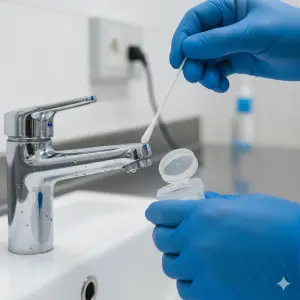
Step 1: Sample Delivered to Us
Our clients collect a water sample from a key outlet using a sterile bottle to ensure the sample’s integrity. If guidance is required on how this process is to be carried out, we can provide that.
All samples should be tested within 24 hours of collection.
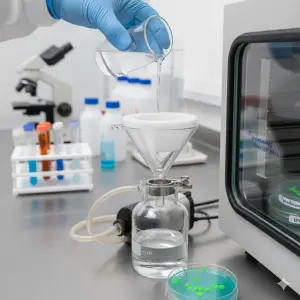
Step 2: Filtration and Incubation
In the lab, the water is passed through a filter to concentrate any bacteria present.
The filter is then placed on a selective agar plate that encourages the growth of Pseudomonas while inhibiting other bacteria.
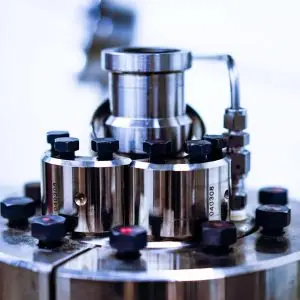
Step 3: Identification and Confirmation
After incubation, our microbiologists identify any bacterial growth.
For Pseudomonas aeruginosa, additional confirmatory tests are performed to ensure accurate identification.
The acceptable level for Pseudomonas aeruginosa in high-risk water systems is zero.
Frequently Asked Questions
Q: Why is Pseudomonas aeruginosa a particular concern in hospitals?
A: Patients in augmented care units often have compromised immune systems, making them highly susceptible to infections. P. aeruginosa can contaminate water outlets, taps, and medical equipment, posing a direct risk to these vulnerable individuals.
Q: What does a positive Pseudomonas test mean for my system?
A: A positive result indicates a lapse in water quality control and the potential for biofilm formation. For P. aeruginosa, immediate action is required as per your risk assessment. This typically involves disinfection of the affected outlets or system, followed by re-sampling to confirm the treatment was effective.
Q: How can Pseudomonas contamination be prevented?
A: Prevention starts with good system design to avoid stagnation (e.g., removing dead legs). Regular flushing, maintaining correct water temperatures, and appropriate biocide treatment are also key control measures.